TOP 5 HEALTH LAWS AND POLICY UPDATES

Dear Readers, we are happy to share the most interesting legal and policy updates concerning health industry that we read today. We hope you enjoy reading it.

1. The Central Pollution Control Board (CPCB) has notified the establishment of a National Control Room (NCR) to coordinate and monitor nationwide enforcement of the ban on identified single-use plastic items. The NCR will support clarity, compliance tracking, stakeholder guidance, state control room reporting, inspections and awareness campaigns.
Source: h7.cl/1lmmL

2. The National Medical Commission has directed medical colleges to establish committees to monitor prescription practices, emphasising clear and legible handwriting and the use of generic drug names. The directive aims to strengthen patient safety, promote rational prescribing, and integrate these practices into medical education nationwide.
Source: h7.cl/1lmm6

3. Food Safety and Standards Authority of India has reportedly directed all states and Union Territories to launch a nationwide enforcement drive against adulteration and misbranding of milk, paneer and khoya. The move follows repeated detections and aims to protect public health through strict inspections and penalties across country.
Source: h7.cl/1gsAC

4. More than 60% of registered small and medium pharmaceutical units in India reportedly risk shutting down by December 2025 due to non-compliance with revised GMP (Schedule M) quality standards. Industry stakeholders warn of potential medicine shortages, job losses, and export disruptions if compliance challenges are not addressed promptly.
Source: h7.cl/1gsAd

5. The EU’s Medical Device Coordination Group has issued new guidance clarifying criteria for qualifying breakthrough medical and IVD devices under MDR/IVDR. It defines key criteria such as significant clinical benefit, unmet medical need, and innovation level, aiming to harmonize interpretation across authorities and support early regulatory engagement without lowering safety or evidence requirements.
Source: h7.cl/1lmli

TOP 5 HEALTH LAWS AND POLICY UPDATES

Dear Readers, we are happy to share the most interesting legal and policy updates concerning health industry that we read today. We hope you enjoy reading it.

1. India’s food regulator, FSSAI, has reportedly initiated a nationwide surveillance drive to collect and test egg samples (branded and unbranded) for banned antibiotics like nitrofurans. Additionally, FSSAI is also scrutinising declarations such as ‘100% chemical-free’, ‘antibiotic-free’, ‘100% pure’, or ‘fresh’, checking compliance with permissible labelling declarations.
Source: h7.cl/1gl8j

2. India will host the Second World Health Organization Global Summit on Traditional Medicine in New Delhi from 17 to 19 December 2025, bringing global leaders together to strengthen science-based, ethical and sustainable integration of traditional medicine into national health systems and the global health policy framework.
Source: h7.cl/1leF9

3. India’s Parliamentary Standing Committee on Health & Family Welfare has reportedly called on the National Medical Commission (NMC) to issue clear guidelines to establish new medical colleges in states with fewer than 100 MBBS seats per million population, addressing uneven seat distribution, high costs, faculty shortages and access gaps in medical education.
Source: h7.cl/1gl9d

4. The Indian Council of Medical Research has reportedly funded a pan India clinical trial, Intermittent PARP Inhibitor Regimen in Ovarian Cancer, to evaluate intermittent dosing of the PARP inhibitor rucaparib in ovarian cancer, aiming to reduce treatment costs and side effects while maintaining clinical efficacy and improving patient access.
Source: h7.cl/1leFj

5. The Telangana Drugs Control Administration conducted a statewide inspection of retail medical shops and raided an unlicensed fertility centre, issuing notices to 180 outlets and seizing multiple medicines, reinforcing enforcement against illegal drug sales and violations of the Drugs and Cosmetics Act, and ensuring patient safety across the state.
Source: h7.cl/1gl8A

TOP 5 HEALTH LAWS AND POLICY UPDATES

Dear Readers, we are happy to share the most interesting legal and policy updates concerning health industry that we read today. We hope you enjoy reading it.

1. The Ministry of Health and Family Welfare has published a draft amendment to the Medical Devices Rules, 2017, proposing changes to labelling requirements for non-sterile and non-measuring medical devices, along with other regulatory updates. Stakeholders’ comments are invited within 30 days of publication of the draft Rules.
Source: h7.cl/1ghFK

2. India’s Bureau of Indian Standards has notified IS 19493:2025 on hospital bill formats, effective 8 December 2025. The standard specifies mandatory and optional billing elements for hospitals, nursing homes, diagnostic centres, and outpatient clinics, aiming to ensure uniformity, transparency, prevent overcharging, and improve clarity for patients and insurers nationwide.
Source: h7.cl/1ghFQ

3. The Supreme Court of India has issued notices to the Centre and all states on a PIL seeking to declare cancer a notifiable disease nationwide. The move aims to ensure uniform reporting, strengthen surveillance, and improve early detection and patient care through a centralized digital registry amid fragmented state-level data.
Source: h7.cl/1ghG2

4. A pharmaceutical innovator has appealed a Delhi High Court order permitting an Indian manufacturer to produce and export semaglutide to markets where patent protection has lapsed. The court declined interim relief, allowing exports to continue.
Source: h7.cl/1lb5k

5. The Ministry of Information and Broadcasting stated that the Information Technology Rules 2021 safeguard free speech while curbing fake and misleading digital content. Publishers of news must follow a Code of Ethics, intermediaries must prevent false information, and a grievance mechanism and fact checking by Press Information Bureau ensure accountability nationally.
Source: h7.cl/1ghGa

TOP 5 HEALTH LAWS AND POLICY UPDATES

Dear Readers, we are happy to share the most interesting legal and policy updates concerning health industry that we read today. We hope you enjoy reading it.

1. The Competition Commission of India has ordered three Maharashtra liquor trade associations to cease anti-competitive practices, including influencing prices and restricting market access. The CCI found the groups violated the Competition Act and directed them to stop such conduct, though no monetary penalties were imposed.
Source: h7.cl/1g7kN

2. The Punjab government has issued strict new directives for private hospitals to curb exploitation, including mandated humane treatment protocols and safeguards in sensitive situations like patient death. The move aims to strengthen patient rights and accountability in healthcare delivery amid public concerns over unethical practices.
Source: h7.cl/1l0ob

3. Karnataka’s Health Minister has reportedly cautioned private hospitals against conducting unnecessary caesarean deliveries for financial gain, stating that violations under the Karnataka Private Medical Establishments Act may attract penalties up to fifty thousand rupees and potential cancellation of registration, following due process, if establishments fail to comply with regulatory directions.
Source: h7.cl/1l0p7

4. The All India Organisation of Chemists and Druggists has reportedly urged the Prime Minister to halt illegal e-pharmacy operations and withdraw proposed drug regulations, warning that unregulated online medicine sales, especially antibiotics, violate key laws and dangerously accelerate antimicrobial resistance, creating a significant threat to India’s public health system.
Source: h7.cl/1l0o0

5. The Indian Medical Parliamentarians’ Forum has reportedly warned that funding gaps and delays in India’s Rare Disease Policy are disrupting life-saving enzyme therapy for Lysosomal Storage Disorder patients. Over 60 patients have exceeded the ₹50-lakh cap and nearly 100 face imminent treatment loss, prompting urgent calls for expanded funding and sustained government support.
Source: h7.cl/1g7iS

TOP 5 HEALTH LAWS AND POLICY UPDATES

Dear Readers, we are happy to share the most interesting legal and policy updates concerning health industry that we read today. We hope you enjoy reading it.

1. India’s Finance Ministry has amended the Narcotic Drugs and Psychotropic Substances Rules, 1985 to replace Form 4A and revise Form 5, tightening procedures for import and export of narcotic drugs. The new rules mandate stricter documentation, separate accounting, monthly returns, transport permits, export-only restrictions, and compulsory surrender of unused morphine, codeine, thebaine and their salts to government facilities.
Source: h7.cl/1l0Dd

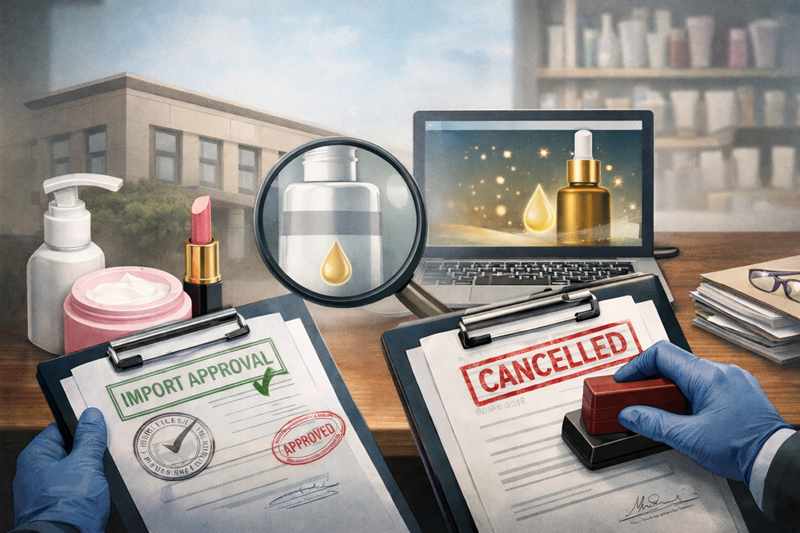
2. The Finance Ministry has authorized 15 pharma companies to import morphine, codeine, thebaine and their salts solely for producing export-bound formulations under strict conditions including use within 180 days, limits on waste, and surrender of unused material. The order is valid until December 31, 2027, with import certificates valid for 180 days.
Source: h7.cl/1g7yD

3. The Delhi High Court recorded an undertaking that a major Indian pharmaceutical company will not sell its semaglutide-based drug in India until March 20, 2026 when the secondary patent on the medicine is set to expire of another pharma company, while permitting it to manufacture and export the product to markets where no patent rights exist. The company’s assurance was noted by the court amid ongoing patent disputes, with similar relief previously granted to another domestic manufacturer in related proceedings.
Source: h7.cl/1g7xa

4. The Consumer Protection (Amendment) Bill, 2025, proposes to expand the definition of unfair trade practices to include nondisclosure of key terms and dynamic pricing, algorithmic manipulation of consumer behaviour, and the use of complex barriers that impede cancellations, returns, or opting out of services, thereby strengthening India’s legal framework against dark patterns.
Source: h7.cl/1l0Ca

5. India will reportedly invite the World Health Organization to audit and rate its drug regulatory system, aiming to strengthen quality oversight and restore global confidence in its pharmaceutical sector. The initiative follows recent safety concerns and seeks to align national processes with international regulatory maturity standards.
Source: h7.cl/1l0Ce

TOP 5 HEALTH LAWS AND POLICY UPDATES

Dear Readers, we are happy to share the most interesting legal and policy updates concerning health industry that we read today. We hope you enjoy reading it.

1. A multinational pharmaceutical company has approached the Delhi High Court to restrain the domestic pharma giant from launching its generic version of semaglutide, a widely prescribed drug for diabetes and weight loss. This is the second suit by the plaintiff innovator against local firms wanting to launch copies of the drug
Source: h7.cl/1g6X3

2. Department for Promotion of Industry and Internal Trade (DPIIT) has issued a draft framework mandating blanket licence for legally accessible content for AI-training, but deferring royalty payments until commercialisation. The plan sets up a centralised royalty-collection mechanism, replacing “zero-price licence” proposals.
Source: h7.cl/1g6X7

3. The Delhi High Court has temporarily barred a local supplier from using a mark found deceptively similar to a well-known ayurvedic brand, holding that the adoption appeared misleading and capable of confusing consumers. The Court restrained manufacture, sale, promotion, and any creation of third-party rights during the proceedings.
Source: h7.cl/1l00x

4. The Drug Consultative Committee has noted that some State Licensing Authorities (SLA) are issuing manufacturing licenses for new drugs without prior written approval from the Central Licensing Authority (CLA), as required under The New Drugs and Clinical Trials Rules, 2019. Members unanimously agreed that SLAs must obtain CLA approval before granting any such manufacturing permission.
Source: h7.cl/1g6Xk

5. The United States Food and Drug Administration has reportedly finalized guidance on promotional labeling and advertising for biologics and biosimilars, outlining standards to ensure accurate and non-misleading communications. The document clarifies expectations for data presentation, comparative claims, and identification of products, with specific caution against comparisons that imply reduced safety or effectiveness.
Source: h7.cl/1l00M

TOP 5 HEALTH LAWS AND POLICY UPDATES

Dear Readers, we are happy to share the most interesting legal and policy updates concerning health industry that we read today. We hope you enjoy reading it.

1. India’s Central Drug authority (CDSCO) is considering a separate wholesale licence for bulk drugs and excipients to distinguish them from APIs and finished formulations. The proposal includes capturing details of wholesalers handling NDPS substances and requiring competent persons to be either science graduates with relevant experience or registered pharmacists, strengthening oversight and regulatory compliance.
Source: h7.cl/1fZHk

2. India’s Drugs Consultative Committee addressed non-compliance issues in hospital blood centres and directed states to strengthen oversight. Key actions include regular inspections with focus on viral marker testing, adherence to NBTC licensing procedures for charitable and voluntary centres, and timely licence renewals. States were urged to ensure strict compliance to maintain a safe blood supply.
Source: h7.cl/1fZHk

3. The Indian Pharmacopoeia Commission will release the tenth edition of the Indian Pharmacopoeia on January 2, 2026, with standards effective from July 1, 2026. The new edition adds 121 monographs, five general chapters, and expanded harmonization to strengthen drug quality and regulatory alignment in India.
Source: h7.cl/1kRtQ

4. The Central Consumer Protection Authority (CCPA) imposed a penalty on e-commerce platform for allowing the sale of walkie-talkies without mandatory disclosures on regulatory approvals. This suo motu action stemmed from listings that omitted details on spectrum compliance, frequency usage, potentially misleading consumers about the devices’ legality and exposing them to risks.
Source: h7.cl/1kRwR

5. The Central Pollution Control Board (CPCB) has released a comprehensive guide on ticket creation to help producers navigate the Extended Producer Responsibility (EPR) portal for battery and e-waste management. The guide aims to streamline communication between producers and the regulator for all EPR-related queries.
Source: h7.cl/1fZK0

TOP 5 HEALTH LAWS AND POLICY UPDATES

Dear Readers, we are happy to share the most interesting legal and policy updates concerning health industry that we read today. We hope you enjoy reading it.

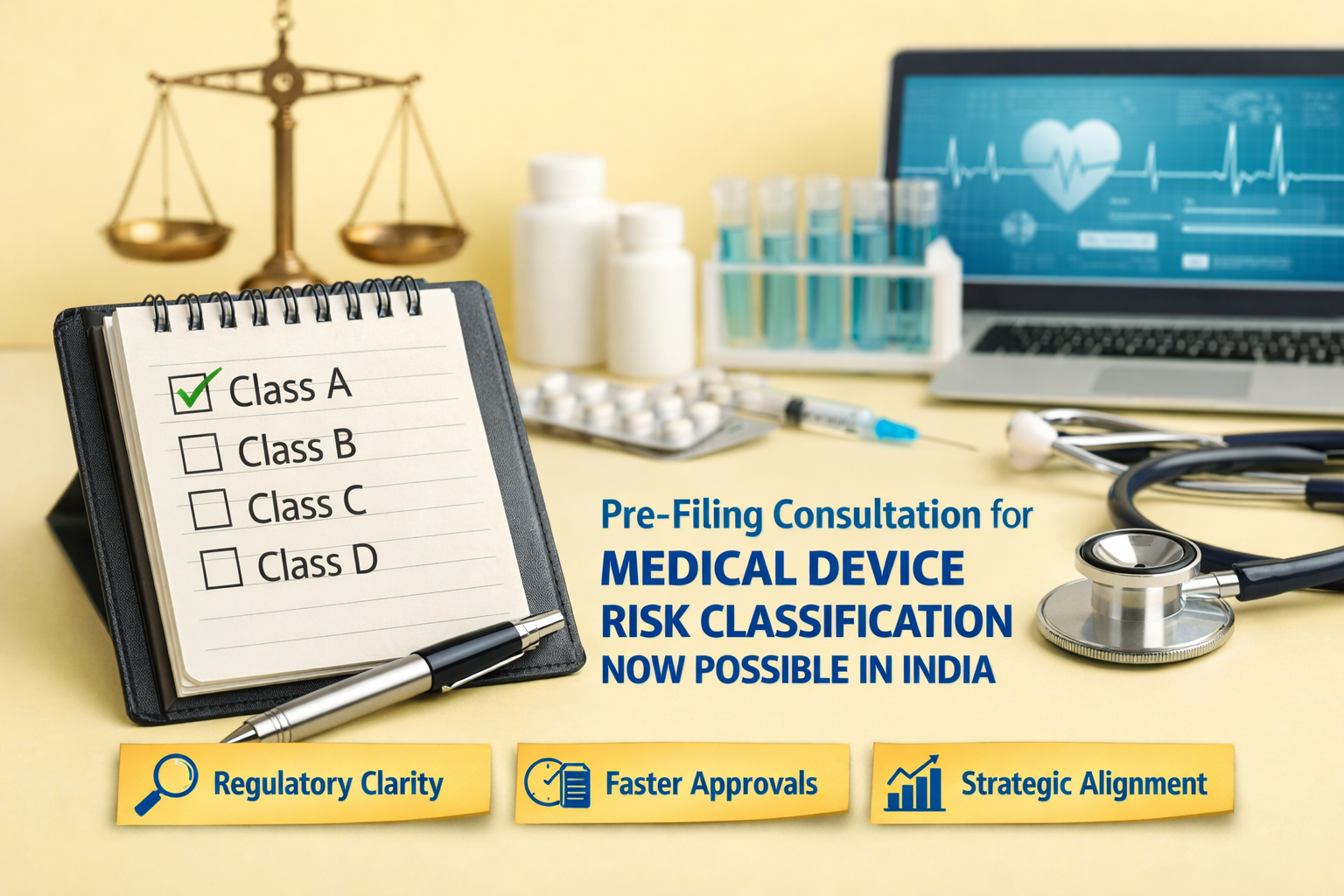
1. India’s Central Drugs Standard Control Organization (CDSCO) has launched a new online Risk Classification Module for medical devices, excluding IVDs. Effective 27 November 2025, applicants can seek classification for devices not listed in CDSCO’s published list via the portal, simplifying regulatory approvals for Medical Devices.
Source: h7.cl/1kNrH

2. Indian Council of Medical Research (ICMR) and India’s Central Drug authority CDSCO (IVD Division) has jointly developed the MedTech Mitra IVD Innovators Handbook to guide developers through clinical validation. It outlines key milestones, regulatory and ethical expectations, and evidence requirements, helping innovators plan effectively and generate strong clinical data to support the safety and efficacy of their diagnostic products.
Source: h7.cl/1kNrK

3. Rajya Sabha members urged the government to ban misleading surrogate ads promoting tobacco and liquor, citing rising cancer and heart disease cases. During debate on the Central Excise (Amendment) Bill, 2025, they sought stricter controls, awareness campaigns and higher taxes to curb tobacco use and protect public health.
Source: h7.cl/1fVMQ

4. The Delhi High Court has declined to grant injunctive relief against an Semaglutide manufacturer, thereby permitting the manufacture and export of semaglutide to jurisdictions where no valid patent protection subsists. The Court clarified that while export to non-patent markets is permissible, the sale or distribution of the drug within India remains prohibited until expiry of the relevant patent.
Source: h7.cl/1kNrT

5. The Indian government has introduced the Health Security se National Security Cess Bill, 2025, proposing a new cess on the installed machinery or processes used for the manufacture of goods such as pan masala, with scope to include other products in future. The cess will apply across all production methods, machine-based, manual, or hybrid.
Source: h7.cl/1kNrW

TOP 5 HEALTH LAWS & POLICY UPADATES

Dear Readers, we are happy to share the most interesting legal and policy updates concerning health industry that we read today. We hope you enjoy reading it.

1. India’s Central Pollution Control Board (CPCB) has issued a new SOP for using spent acetic acid from 7ADCA and paracetamol manufacturing to produce Pigment Yellow 12. The guideline lays out strict rules for storage, handling, emissions control, wastewater treatment, and record-keeping to ensure the safe and compliant utilization of hazardous waste.
Source: h7.cl/1fJVZ

2. The Parliamentary Standing Committee on Chemicals and Fertilisers has reported steep disparities between stockist and retail prices of several non-scheduled drugs, with trade margins reaching 600–1,100%. It has urged the NPPA and Department of Pharmaceuticals to review trade-margin practices and strengthen pricing transparency across the supply chain.
Source: h7.cl/1fJW7

3. The Department of Telecommunications (DoT) has reportedly directed messaging platforms to implement SIM-binding, linking user accounts to the SIM used during registration. Under this mandate, web-based sessions of messaging platforms will automatically log users out every six hours and require re-authentication.
Source: h7.cl/1kBdb

4. Pune Municipal Corporation has reportedly issued guidelines urging residents to avoid over-the-counter (OTC) antibiotics to combat rising antimicrobial resistance (AMR), aligning with Union government directives. Residents must use antibiotics only with prescriptions and complete full courses, especially during winter.
Source: h7.cl/1kBdk

5. The government of China will reportedly begin charging a 13 % value added tax on condoms and other contraceptives from January, ending a decades-long exemption. The move aims to encourage higher birth rates, but critics warn it could increase unprotected sex and fail to address high child-rearing costs.
Source: h7.cl/1fJWy

TOP 5 HEALTH LAWS & POLICY UPADATES

Dear Readers, we are happy to share the most interesting legal and policy updates concerning health industry that we read today. We hope you enjoy reading it.

1. The Government of India has notified the Legal Metrology (Packaged Commodities) Second Amendment Rules, 2025, effective 1 February 2026. The amendment removes pan masala from an earlier exemption, mandating that all pan masala packages, regardless of size, must fully comply with the standard declaration requirements prescribed under the rules.
Source: h7.cl/1kzQU

2. Central Pollution Control Board has issued a notice allowing plastic packaging producers, importers, and brand owners facing a shortage of Cat II/III recycling certificates to use End-of-Life (EOL) certificates to meet their FY 2024–25 recycling obligations. Now, 1 ton of Cat II/III recycling obligation can be fulfilled using 1.5 tons of EOL certificates.
Source: h7.cl/1kzQI

3. The U.S. Food and Drug Administration (FDA) has issued draft guidance reducing or eliminating the requirement for non human primate toxicity testing for certain monoclonal-antibody therapies. This change may shorten preclinical timelines and lower costs, while promoting alternative safety evaluation methods.
Source: h7.cl/1fEU5

4. India’s drug regulator has been alerted that fake versions of widely used medicines may be circulating after Puducherry officials seized several suspected counterfeit samples. States and Union Territories have also been asked to maintain “strict vigil” on the movement of these batches of widely popular medicines.
Source: h7.cl/1kw0M

5. The Supreme Court has issued notice to the Union Government on a petition seeking a statutory framework for criminal prosecution in medical negligence cases. The plea highlights that no rules have been created despite the Jacob Mathew judgment in 2005 and urges independent, multi-stakeholder inquiry panels to ensure fair, unbiased investigations.
Source: h7.cl/1fETM