TOP 5 HEALTH LAWS AND POLICY UPDATES

Dear Readers, we are happy to share the most interesting legal and policy updates concerning health industry that we read today. We hope you enjoy reading it

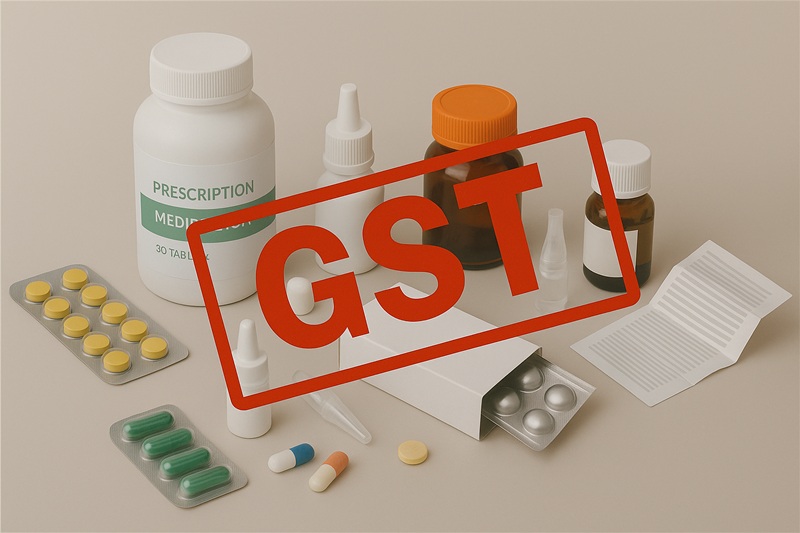
1. The Department of Consumer Affairs has uploaded the list of revised retail sale prices declared by companies in response to the recent GST rate changes. This update reflects company’s adjustments to the new tax rates, impacting pricing across various product categories, including drugs and medical devices.
Source: https://short-url.org/1cK-p

2. Investigations into the cough syrup incident have reportedly revealed that the manufacturer allegedly paid a 10% commission to the doctor for prescribing the syrup. Authorities are continuing their probe, focusing on both the manufacturer and the doctor’s involvement in the case.
Source : https://short-url.org/1cK-H

3. The National Medical Commission is reportedly planning to prohibit pharma and medical device promotions during live surgery broadcasts, citing misuse for marketing over education. Live surgeries will be allowed only for new procedures, with recordings preferred for others, to prevent ethical breaches and ensure patient safety in medical demonstrations
Source: https://short-url.org/1cK-P

4. The Delhi High Court has permitted the launch of an affordable generic version of a drug used to treat spinal muscular atrophy, upholding that a credible challenge was raised to the patent and emphasising that affordable access to life-saving treatment outweighs the need for injunctive relief in public interest.
Source : https://short-url.org/1cL07

5. The US Food and Drug Administration (FDA) reviewed a direct-to-consumer TV advertisement by a major drug manufacturer and found it false and misleading. According to the FDA, the ad’s rapid visuals, background music, and frequent scene changes distracted viewers, hindering understanding of important risk information and creating a misleading perception of the drug’s effectiveness among consumers.
Source : https://short-url.org/1cL04

TOP 5 HEALTH LAWS AND POLICY UPDATES

Dear Readers, we are happy to share the most interesting legal and policy updates concerning health industry that we read today. We hope you enjoy reading it.

1. The Delhi High Court has recently ruled that businesses cannot justify failure to reduce prices after a GST rate cut by claiming to have increased the product quantity, especially when such changes are made without informing consumers. Continued non-compliance may lead to GST registration cancellation under anti-profiteering provisions.
Source: short-url.org/1gqnP

2. Central Drugs Standard Control Organization (CDSCO) has clarified that combi-packs of lyophilized injections with standard diluents (e.g., sterile water or saline) used for over four years will not be treated as new drugs, allowing State Licensing Authorities approval. Combi-packs with different diluents will still require CDSCO approval as new drugs.
Source: short-url.org/1gqnS

3. The Ministry of Labour and Employment has released draft Factories Workers Rules under the OSHW Code, 2020, inviting comments until 6th November 2025. The rules mandate safety, health, and welfare measures, including sanitation, ventilation, separate facilities, first-aid, nutrition, and emergency preparedness, with obligations varying by workforce size.
Source: short-url.org/1gqo1

4. Over the next five years, drugs worth $236 billion globally are slated to lose patent protection, paving the way for generic drugs and biosimilars. This “patent cliff” allows Indian pharma to capture market share, grow revenues, and lower drug costs for patients globally.
Source: short-url.org/1gqo6

5. Over the past five years, National Medical Commission (NMC) Ethics & Medical Registration Board has dismissed 162 appeals filed by patients/families alleging medical negligence. India’s Central Health Ministry has now reportedly begun a review of this, planning to consult with NMC to understand and address potential procedural bias.
Source: short-url.org/1bLfY

Frequently Asked Questions (FAQ’s) on regulatory compliances associated with GST rate reduction of medicines in India

On September 03, 2025, The Goods & Services Tax Council has announced the reduction in Goods and Services Tax (GST) rates for medicines. The reduced GST rates will come into effect on September 22, 2025. In this article, we have answered frequently asked questions (FAQs) about compliance associated with the reduction in GST rates for medicines (other than ayurveda and homeopathy medicines).

[If you are short on time, please read response to Q.3 and 4]

GST reduction and its impact on existing stock

1. Will the reduced GST rates apply to stock of medicines already present in the market, and if so, will the MRP of such medicines have to be reduced?

Yes. The reduced GST rates will apply to all the stock of medicines already present in the market on or after September 22, 2025, irrespective of the fact that it was manufactured, imported or packed prior to September 22, 2025.

The MRP of the medicines available in the market on or after September 22, 2025 will have to be reduced to reflect the reduction in GST rates, and the reduced MRP along with the revised GST rates applicable to medicines will have to be communicated by the manufacturers and importers of medicines to all wholesale and retail dealers. However, the MRP declared on the package of medicines need not be re-labelled or re-stickered. We have discussed this aspect in our response to Q. 5-9 below.

2. Is it possible to retain same MRP on medicines present in the market after reducing GST?

No. While it is generally permissible to increase MRP of medicines by up to 10% in India if they are not essential medicines (i.e. if they are not scheduled formulations under DPCO), doing so for stock of medicines which were manufactured or imported prior to September 22, 2025 may tantamount to denying trade and customers the benefit of reduction of GST, which is not permissible under India’s GST laws and is generally regarded as unlawful ‘profiteering’.

Compliances to be undertaken on account of reduction in GST rate

3. Which mandatory compliances should a manufacturer or importer of medicines undertake before September 22, 2025 to ensure compliance with applicable laws?

Manufacturers and importers of medicines should circulate a revised price list of medicines manufactured or imported or marketed by the company in Form V of DPCO to wholesale and retail dealers, State Drug Controllers, National Pharmaceutical Pricing Authority (NPPA) and Department of Pharmaceuticals (DoP), indicating revised GST rates and the revised MRP effective from September 22, 2025. The revised price list may be circulated through any suitable communication channel, including WhatsApp and email.

4. Which mandatory compliances should be undertaken by a manufacturer or importer of medicines on or after September 22, 2025 to ensure compliance with applicable laws?

Manufacturers and importers of medicines should undertake the following steps as soon as possible on or after September 22, 2025, in addition to declaring reduced MRP on package:

  • Submit the revised price list in Form V of DPCO on the IPDMS portal of NPPA, on or before October 6, 2025.
  • File Form II of DPCO to report a decrease in MRP on IPDMS Portal of NPPA, on or before October 6, 2025, applicable only if the medicine is part of list of scheduled formulations under DPCO.
  • Re-labelling of existing stock of medicines with revised MRP

5. Is it mandatory to declare reduced MRP on the label of medicines available with wholesale and retail dealers, which have been manufactured in India or imported into India before September 22, 2025?

No. It is not mandatory to declare reduced MRP on the label of medicines available with wholesale and retail dealers which are manufactured in India or imported into India before September 22, 2025.

However, all such medicines manufactured in India or imported into India on or after September 22, 2025 must declare reduced MRP on their label.

6. Is it mandatory to declare reduced MRP on the label of medicines stored at manufacturer’s or importer’s warehouse, which have been manufactured in India or imported into India before September 22, 2025?

No. It is not mandatory to declare reduced MRP on the label of medicines stored at manufacturer’s or importer’s warehouse, which have been manufactured in India or imported into India before September 22, 2025 provided the compliance described in response to Q. 3 have been taken.

However, if a manufacturer or importer of medicines wishes to voluntarily declare reduced MRP on the label of medicines, then the compliances described in response to Q. 7, 8 and 9 should be followed.

It is recommended that the unsold stock of medicines stored at manufacturers or importer’s warehouse should be re-labelled with reduced MRP before sale to trade, in order to reduce risk of allegation of overcharging or profiteering due to failure of retailer to sell at reduced MRP despite being notified by the manufacturer or importer about the reduction of MRP.

7. Is any permission required to re-label medicines with reduced MRP on account of reduction of GST?

Yes. While there is a prevailing understanding that all State Licensing Authorities (SLAs) in India have temporarily relaxed the requirement to obtain a manufacturing license or NOC by the manufacturers or importers for declaring reduced MRPs on medicines manufactured or imported by them before September 22, 2025, it may be pragmatic to confirm this understanding locally with the SLA of the State in which re-labelling is sought to be carried out before doing the re-labelling.

For example, in Delhi, it is mandatory for manufacturers and importers to obtain a No Objection Certificate (NOC) from the Delhi Drug Control Department prior to declaring reduced MRP on the label of medicines on account of revision of GST and no time-limit has been specified before which such re-labeling may be carried out on the label of medicines.

Please note that the re-labelling to reflect reduced MRP on account of reduction in GST is subject to conditions which are discussed in response to Q. 8 and Q.9 below.

8. If a manufacturer or importer wishes to declare revised MRP on medicines which were manufactured in India or imported into India before September 22, 2025 and whose stock is available with wholesale and retail dealers or is present in manufacturer’s or importer’s warehouse, what are the legal compliances that such manufacturer or importer should be aware of?

Assuming the manufacturer or importer has complied with the mandatory requirements outlined in response to Q. 3 and 7 above, it may lawfully declare revised MRP by re-labeling medicines which have been manufactured in India or imported into India before September 22, 2025, after fulfilling the below-mentioned conditions:

  • The original MRP must remain visible, and the revised MRP must not be overwritten on it.
  • Other declarations on the label should not be affected.
  • The stocks should be re-called in a phased manner to avoid any shortage of the medicines in the market.

9. What are the permitted ways of declaring reduced MRP on the pack of medicines on account of reduction in GST?

Assuming the manufacturer or importer has complied with the mandatory requirements outlined in response to Q. 3, 7 and 8, the manufacturers and importers of medicines may declare reduced MRP on pack of medicines by stamping or affixing stickers or by printing.
Compliances applicable to wholesale and retail dealers

10. How are wholesale and retail dealers expected to know the revised GST rate and reduced MRP applicable to medicines stocked by them, if the stock of medicines available with them does not carry on the label a declaration of reduced MRP as of September 22, 2025?

As indicated in response to Q. 3, all manufacturers and importers of medicines are required to notify wholesale and retail dealers about revised GST rates and reduced MRP latest by September 21, 2025 by circulating a revised price list in Form V which is effective from September 22, 2025.

Accordingly, on or after September 22, 2025, all wholesale and retail dealers of the medicines must refer to the revised price list received from the manufacturer or importers of medicines before selling stock of medicines in their possession.

11. What are the compliances applicable to wholesale and retail dealers who have stock of medicines manufactured in India or imported into India prior to September 22, 2025?

On or after September 22, 2025, all wholesale and retail dealers must:

  • Sell medicines at reduced MRP after applying revised GST rates;
  • Verify the revised GST rate and reduced MRP against the revised price list in Form V received from the manufacturer or importer of medicines;
  • Display the revised price lists of medicines received from the manufacturers or importers on a conspicuous part of the premises where they carry on business; and
  • Not alter, tamper, over-sticker or re-label the existing product packaging.

    Penalties for non-compliance

  • 12. What are the consequences of failure to circulate revised price list in Form V to wholesale and retail dealers before September 22, 2025?

    The failure to circulate Form V before September 22, 2025 may result in recovery of the difference between old MRP and revised MRP from the manufacturer or importer of medicines as ‘overcharging’, along with interest and penalty, even though overcharged amount has been realized by the wholesale dealer or retail dealer.

    The failure to submit Form V on the IPDMS portal on or before October 6, 2025 will constitute a violation of DPCO and may lead to penal action under the Essential Commodities Act, 1955 including fine and imprisonment.

    13. What are the consequences of non-submission of Form II of DPCO before October 6, 2025?

    Non-submission of Form II of DPCO is deemed to be a failure to reduce MRP of medicines by the manufacturer or importer despite reduction in GST rates. The manufacturer or importer may be held liable for overcharging consumers and be required to pay the overcharged amount, along with interest and a penalty. It may also result in criminal prosecution under the Essential Commodities Act, 1955, inviting fine and imprisonment if convicted. Form II is required to be submitted only in case of reduction of MRP of medicines which are classified as scheduled formulations under DPCO.

    Requirement for obtaining a manufacturing license or NOC from State Licensing Authority for re-labelling

    14. Will declaration of reduced MRP on packages of medicines be considered to be “manufacturing” and require a manufacturing license or NOC from State Licensing Authority or CDSCO?

    The re-labelling of a medicine may be legally construed as manufacture of medicine under The Drugs and Cosmetics Act, 1940 (D&C Act), and such manufacturing activity requires a license from the Licensing Authority under D&C Act. The Licensing Authority in case of manufacturing of medicines in India is the respective State Licensing Authority i.e. SLA (for example – State Drug Control Department, State Food and Drug Administration). Such a license is require from SLA irrespective of whether the drug is manufactured in India or imported into India,

    As indicated in response to Q. 7, the possibility and time-limit for carrying out the re-labelling of medicines with reduced MRP should be checked locally with the respective SLA in each state where the re-labelling is sought to be carried out prior to undertaking re-labelling.

    Disclaimer: This article contains personal views of the authors and should not be considered as legal advice.

    Frequently Asked Questions (FAQ’s) on regulatory compliances associated with GST rate reduction of medical devices in India

    On September 03, 2025, The Goods & Services Tax Council has announced the reduction in Goods and Services Tax (GST) rates for medical devices, medical equipment, medical apparatus and IVDs listed at the end of this article (“listed medical devices”). The reduced GST rates will come into effect on September 22, 2025. In this article, we have answered frequently asked questions (FAQs) about compliance associated with the reduction in GST rates for those listed medical devices which declare the Maximum Retail Price (MRP) on their package.

    [If you are short on time, please read response to Q.3 and 4]

    GST reduction and its impact on existing stock

    1. Will the reduced GST rates apply to stock of medical devices already present in the market, and if so, will the MRP of such medical devices have to be reduced?

    Yes. The reduced GST rates will apply to all of the stock of the listed medical devices sold on or after September 22, 2025, irrespective of the fact that it was manufactured, imported or packed prior to September 22, 2025.

    The MRP of the stock of listed medical devices available in the market on or after September 22, 2025 will have to be reduced to reflect the reduction in GST rates, and the revised GST rate applicable to listed medical devices and the reduced MRP will have to be communicated to all wholesale and retail dealers by the manufacturers and importers of listed medical devices. However, the MRP declared on the package of the listed medical devices need not be re-labelled or re-stickered. We have discussed this aspect in our response to Q. 5-9 below.

    2. Is it possible to retain same MRP on stock of medical devices present in the market after reducing GST?

    No. While it is generally permissible to increase MRP of medical devices by up to 10% in India, doing so for stock of medical devices which was manufactured or imported prior to September 22, 2025 may tantamount to denying trade and customers the benefit of reduction of GST, which is not permissible under India’s GST laws and is generally regarded as unlawful ‘profiteering’.

    Compliances to be undertaken on account of reduction in GST rate

    3. Which mandatory compliances should a manufacturer or importer of medical devices undertake before September 22, 2025 to ensure compliance with applicable laws?

    Manufacturers and importers of the listed medical devices should undertake the following steps as soon as possible, but no later than September 21, 2025:

    • Circulate a notice informing wholesale and retail dealers about revised applicable GST rate and reduced MRP, effective September 22, 2025, and ensure that the Director of Legal Metrology (Central Government) and the Controller of Legal Metrology of States and Union Territories receive a copy of the circulated notice.
    • Circulate a revised price list of listed medical devices manufactured or imported or marketed by the company in Form VI of DPCO to wholesale and retail dealers, State Drug Controllers, National Pharmaceutical Pricing Authority (NPPA) and Department of Pharmaceuticals (DoP), indicating revised GST rates and the revised MRP effective from September 22, 2025. The revised price list may be circulated through any suitable communication channel, including WhatsApp and Email.

    [Note: The Director of Legal Metrology has relaxed the requirement to publish advertisements in one or more newspapers informing the trade and public about the revised applicable GST rate and reduced MRP]

    4. Which mandatory compliances should be undertaken by a manufacturer or importer of medical devices after September 22, 2025 to ensure compliance with applicable laws?

    Manufacturers and importers of the listed medical devices should undertake the following steps as soon as possible on or after September 22, 2025, in addition to declaring reduced MRP on package:

    • Submit the revised price list in Form VI of DPCO on the IPDMS portal of NPPA, on or before October 6, 2025.
    • File Form II of DPCO to report a decrease in MRP on IPDMS Portal of NPPA, on or before October 6, 2025, applicable only if the listed medical device falls under the list of scheduled formulations under DPCO.

    Re-labelling of existing stock of medical devices with revised MRP

    5. Is it mandatory to declare reduced MRP on the label of stock of medical devices available with wholesale and retail dealers, which has been manufactured in India or imported into India before September 22, 2025?

    No. It is not mandatory to declare reduced MRP on the label of stock of listed medical devices available with wholesale and retail dealers which has been manufactured India or imported into India before September 22, 2025. However, all listed medical devices manufactured in India or imported into India on or after September 22, 2025 must declare reduced MRP on its label. If there is pre-existing packaging material which contains pre-printed MRP, then it may be used to pack listed medical devices which are manufactured on or before March 31, 2026, in the manner as described in response to Q. 16.

    6. Is it mandatory to declare reduced MRP on the label of medical devices stored at manufacturer’s or importer’s warehouse, which has been manufactured in India or imported into India before September 22, 2025?

    No. It is not mandatory to declare reduced MRP on the label of listed medical devices stored at manufacturer’s or importer’s warehouse, which has been manufactured in India or imported into India before September 22, 2025, provided steps described in response to Q. 3 have been taken.

    However, if a manufacturer or importer of listed medical devices wishes to voluntarily declare reduced MRP on label of medical devices, then we have described the compliances to be followed in our response to Q. 7, 8 and 9.

    It is recommended that the unsold stock of listed medical devices stored at manufacturers or importer’s warehouse should be re-labelled with reduced MRP before sale to trade, in order to reduce risk of allegation of overcharging or profiteering due to failure of retailer to sell at reduced MRP despite being notified by the manufacturer or importer about the reduction of MRP.

    7. Is any permission required to re-label medical devices with reduced MRP on account of reduction of GST?

    No. There is no permission required to re-label medical devices to reflect reduced MRP on account of reduction of GST, provided such re-labelling is done before December 10, 2025 in case of all imported medical devices and domestically manufactured Class C and Class D medical devices. In case of domestically manufactured Class A and Class B medical devices, the timeline for re-labelling to reflect reduced MRP on account of reduction in GST rate will be communicated by respective State’s Medical Device Licensing Authority (example – State Drug Controller, State Food and Drug Department), but under no condition should such re-labelling be done beyond December 31, 2025.

    Please note that the re-labelling to reflect reduced MRP on account of reduction in GST is subject to conditions which are discussed in response to Q. 8 below.

    8. If a manufacturer or importer wishes to declare revised MRP on stock of medical devices which was manufactured in India or imported into India before September 22, 2025 and that stock is available with wholesale and retail dealers or that is present in manufacturer’s or importer’s warehouse, what are the legal compliances that such manufacturer or importer should be aware of?

    Assuming the manufacturer or importer has complied with the mandatory requirements outlined in response to Q. 3 and 7 above, it may lawfully declare revised MRP by re-labeling stock of listed medical devices which has been manufactured in India or imported into India before September 22, 2025, after fulfilling the below-mentioned conditions:

    • The original MRP must remain visible, and the revised MRP must not be overwritten on it.
    • The stocks should be re-called in a phased manner to avoid any shortage of the listed medical devices in the market.

    9. What are the permitted ways of declaring reduced MRP on the pack of medical devices on account of reduction in GST?

    Assuming the manufacturer or importer has complied with the mandatory requirements outlined in response to Q. 3, 7 and 8, the manufacturers and importers of listed medical devices may declare reduced MRP on pack of listed medical devices by stamping or affixing stickers or by online printing.

    Compliances applicable to wholesale and retail dealers

    10. How are wholesale and retail dealers expected to know the revised GST rate and reduced MRP applicable to medical devices stocked by them, if the stock of medical devices available with them does not carry on the label a declaration of reduced MRP as of September 22, 2025?

    As indicated in response to Q. 3, all manufacturers and importers of listed medical devices are required to notify wholesale and retail dealers about revised GST rates and reduced MRP latest by September 21, 2025 by circulating a revised price list which is effective from September 22, 2025.

    Accordingly, on or after September 22, 2025, all wholesale and retail dealers of the listed medical devices must refer to the revised price list received from the manufacturer or importers of listed medical devices before selling stock of listed medical devices in their possession.

    11. What are the compliances applicable to wholesale and retail dealers who have stock of the medical devices manufactured in India or imported into India prior to September 22, 2025?

    On or after September 22, 2025, all wholesale and retail dealers must:

    • Sell listed medical devices at reduced MRP after applying revised GST rates;
    • Verify the reduced MRP against the revised price list received from the manufacturer or importer of listed medical devices
    • Display of revised price lists of the listed medical devices received from the manufacturers or importers on a conspicuous part of the premises where they carry on business; and
    • Not alter, tamper, over-sticker or re-label the existing product packaging.

    Penalties for non-compliance

    12. What are the consequences of failure to circulate revised price list in Form VI to wholesale and retail dealers before September 22, 2025?

    Non-submission of Form VI after reducing MRP is a violation of DPCO and may lead to penal action under the Essential Commodities Act, 1955 resulting in fine and imprisonment.

    13. What are the consequences of non-submission of Form II of DPCO before October 6, 2025?

    Non-submission of Form II of DPCO is deemed to be a failure to reduce MRP of listed medical devices by the manufacturer or importer despite reduction in GST rates. The manufacturer or importer may be held liable for overcharging consumers and be required to pay the overcharged amount, along with interest and a penalty. It may also result in criminal prosecution under The Essential Commodities Act, 1955, inviting fine and imprisonment if convicted.

    14. What are the consequences of failure to notify dealers about applicable revised GST rates and reduced MRP before September 22, 2025?

    Failure to notify dealers about applicable revised GST rates and reduced MRP before September 22, 2025 may invite fine.

    Requirement for obtaining a manufacturing license or NOC from State Licensing Authority for re-labelling

    15. Will declaration of reduced MRP on packages of medical devices be considered to be “manufacturing” and require a manufacturing license or NOC from State Licensing Authority or CDSCO?

    The re-labelling of a medical device may be legally construed as manufacture of medical devices under The Drugs and Cosmetics Act, 1940 (D&C Act), and such manufacturing activity requires a license from the Licensing Authority under D&C Act. The Licensing Authority in case of imported medical devices and domestically manufactured Class C and Class D medical devices is CDSCO. The Licensing Authority in case of domestically manufactured Class A and Class B medical devices is State Licensing Authority (for example – State Drug Control Department, State Food and Drug Administration).

    For the limited purpose of reducing MRP due to revision of applicable GST rates, CDSCO has given concession to importers of medical devices and domestic manufacturers of Class C and Class D medical devices until December 10, 2025 to re-label stock of listed medical devices with reduced MRP without requiring license or NOC from CDSCO.

    Some State Licensing Authorities, such as Jharkhand State Drug Administration, has reportedly given concession to domestic manufacturers of Class A and Class B medical devices in Jharkhand State to relabel stock of listed medical devices with reduced MRP without requiring license or NOC from the said State Licensing Authority until December 31, 2025. It is important for domestic manufacturers of Class A and Class B to check locally about the date until which stock of listed medical devices may be re-labelled with reduced MRP without requiring a license or NOC from State Licensing Authority.

    Any re-labelling activity done beyond the prescribed date may invite application of requirement to obtain license from CDSCO or relevant State Licensing Authority.

    Use of existing packaging material with pre-printed MRP

    16. If the manufacturer or importer has packaging material with pre-printed MRP, can it be used for packaging medical devices manufactured after September 22, 2025?

    Yes. Packaging material or wrappers bearing the pre-printed MRP that could not be exhausted by the manufacturer or importer prior to September 22, 2025 may be used for packaging of listed medical devices manufactured after September 22, 2025 until March 31, 2026.

    However, the manufacturer or importer must declare the revised MRP on the packaging without hiding or over-writing the pre-printed MRP. The revised MRP may be declared by stamping, stickering or online printing.

    If the packaging material with pre-printed MRP contains Unit Sale Price (USP) calculated on the basis of pre-printed MRP, then it is not mandatory to declare the revised USP calculated on the basis of reduced MRP. However, if the manufacturer or importer wishes to voluntarily declare the revised USP on the package alongside old USP calculated on the basis of pre-printed MRP, it is permitted to do so.

    List of Medical Devices whose GST Rates have been reduced

    Sr. No.Name of the productPrevious GST ratesNew GST rates effective from September 22, 2025
    1Thermometers for medical, surgical, dental or veterinary usage18%5%
    2Instruments and apparatus for medical, surgical, dental or veterinary uses for physical or chemical analysis.18%5%
    3All diagnostic kits and reagents12%5%
    4Surgical rubber gloves or medical examination rubber gloves12%5%
    5Contact lenses and Spectacle lenses12%5%
    6Spectacles, corrective
    [including goggles for correcting vision]
    12%5%
    7Instruments and appliances used in medical, surgical, dental or veterinary sciences, including scintigraphic apparatus, other electro-medical apparatus and sight-testing instruments12%5%
    8Mechano-therapy appliances; massage apparatus; psychological aptitude-testing apparatus; ozone therapy, oxygen therapy, aerosol therapy, artificial respiration or other therapeutic respiration apparatus12%5%
    9Other breathing appliances and gas masks, excluding protective masks having neither mechanical parts nor replaceable filters12%5%
    10Apparatus based on the use of X-rays or of alpha, beta or gamma radiations, for medical, surgical, dental or veterinary uses, including radiography or radiotherapy apparatus, X-ray tubes and other X-ray generators, high tension generators, control panels and desks, screens, examinations or treatment tables, chairs and the like12%5%
    11All goods- napkins and napkin liners for babies, clinical diapers12%5%
    12Blood glucose monitoring system (Glucometer) and test strips12%5%
    13Wadding, gauze, bandages and similar articles (for example, dressings, adhesive plasters, poultices), impregnated or coated with pharmaceutical substances or put up in forms or packings for retail sale for medical, surgical, dental or veterinary purposes12%5%
    14Sterile surgical catgut, similar sterile suture materials (including sterile absorbable surgical or dental yarns) and sterile tissue adhesives for surgical wound closure; sterile laminaria and sterile laminaria tents; sterile absorbable surgical or dental haemostatics; sterile surgical or dental adhesion barriers, whether or not absorbable; Waste pharmaceuticals] [other than contraceptives] Ostomy appliances including pouch or flange, stoma adhesive paste, barrier cream, irrigator kit, sleeves, belt, micro-pore tapes12%5%
    15Patent Ductus Arteriosus / Atrial Septal Defect occlusion device12%5%

    Disclaimer:This article contains personal views of the authors and should not be considered as legal advice.

    TOP 5 HEALTH LAWS AND POLICY UPDATES

    Dear Readers, we are happy to share the most interesting legal and policy updates concerning health industry that we read today. We hope you enjoy reading it.

    1. The NPPA has extended the existing ceiling prices for orthopaedic knee implants until November 15, 2025. The earlier deadline was September 15. The extension allows time to review industry representations while maintaining current ceiling prices.
    Source: short-url.org/1eQeU

    2. India’s central drugs regulator, has introduced a new online provision, effective 11th September 2025 for “Subsequent Importer” applications. It allows companies to import medical devices and in-vitro diagnostics already approved by CDSCO for marketing in India. The initiative aims to simplify approvals, brand approvals, enhance transparency, and reduce processing timelines.
    Source: short-url.org/1eQnm

    3. India’s central drug authority has classified pharmaceutical cocrystals of approved active substances as new drugs under New Drugs and Clinical Trials Rules, 2019. Applicants must demonstrate superior properties over physical mixtures, with detailed validation, stability, and bioavailability/bioequivalence data. Submissions will be processed like new active substances, requiring full safety and efficacy evidence.
    Source: short-url.org/1afgK

    4. Pharmaceutical merchant association are reportedly urging India’s government to revise the rule prohibiting the export of pharmaceutical products labelled “For sale in India only.” They claim the regulation has led to substantial losses, hurting global competitiveness, restricting access for overseas patients, and causing market-share losses.
    Source: short-url.org/1eQme

    5. Reportedly, one of the leading toothpaste maker company in the United States will update its packaging from November 1 under a settlement order, showing “pea-sized” amounts for children under six to promote safe, age-appropriate fluoride use and address concerns that previous images encouraged potentially unsafe overuse by young children.
    Source: short-url.org/1afh5

    TOP 5 HEALTH LAWS AND POLICY UPDATES

    Dear Readers, we are happy to share the most interesting legal and policy updates concerning health industry that we read today. we hope you enjoy reading it.

    1. The Government of India has reduced GST to NIL on 36 lifesaving drugs and cut GST on key medical devices and supplies from 18%/12% to 5%, effective September 22, 2025. Pharma and medical device companies must revise MRPs accordingly and comply with pricing norms under The Drugs Price Control Order and anti-profiteering provisions.
    Source: shorturl.at/dRaT8

    2. CDSCO has announced that Institutional Biosafety Committee (IBSC) approvals will now be sufficient for biopharma companies seeking CT-10 permissions to manufacture test items from Category I and II genetic engineering experiments.
    Source: shorturl.at/ACkQm

    3. Maharashtra’s Medical Education Department has instructed the Maharashtra Medical Council (MMC) to begin registering homeopathic practitioners who’ve completed the one-year Certificate Course in Modern Pharmacology (CCMP) under a separate registry. The Indian Medical Association (IMA) has strongly opposed the move deeming it risky to public health, and plans to escalate the matter to the Bombay High Court.
    Source: shorturl.at/Ge5OT

    4. India’s GST Council has reduced the goods and services tax on diagnostic kits, reagents, and medical devices from 12–18% to 5%, effective September 22, 2025. While this lowers the cost base for labs, experts caution that reagent expenses account for only ~20% of diagnostic test costs, so the actual price drop for patients may be a modest 2–5%, depending on providers’ pricing strategies.
    Source: shorturl.at/WvZHI

    5. CDSCO has introduced a dedicated “Not of Standard Quality” (NSQ) alerts portal on its official website, enabling Industry experts to access real-time updates on substandard drug batches.
    Source 1: shorturl.at/oMBXn
    Source 2: shorturl.at/J7Pma

    TOP 5 HEALTH LAWS AND POLICY UPDATES

    Dear Readers, we are happy to share the most interesting legal and policy updates concerning health industry that we read today. we hope you enjoy reading it.

    1. India’s drug price control authority, the National Pharmaceutical Pricing Authority (NPPA) has issued an Office Memorandum instructing drug manufacturers to revise the prices of the drugs on which customs duty has been reduced.
    Source: bit.ly/4gNNEVW

    2. The Materiovigilance Programme of India’s Ministry of Health and Family Welfare has published an updated Draft Adverse Event Reporting Form for In-Vitro Medical Devices seeking public comment. The last date for receiving public comment is 5th March 2025.
    Source: bit.ly/3Qn7kW2

    3. In its recent meeting, the Drugs Consultative Committee (DCC), a policy advisory committee to India’s drug regulator, has raised the proposal to include Anti-microbial drugs in the definition of “New Drug” under the New Drugs and Clinical Trial (Rules), 2019 in an attempt to heighten the oversight of antimicrobial drugs.
    Source: bit.ly/3QqZlao

    4. India’s Union Ministry of Health and Family Welfare has revealed plans to include the human papillomavirus (HPV) vaccine in the national immunization program this year. During the recent Budget session of Parliament, Minister of State for Health stated that the details for its implementation are currently being worked out.
    Source: bit.ly/4hH6dMR

    5. Representatives of the Pharmaceutical industry in the United States are set to meet with the new administration in a bid to revise price-control regulations, and the United States government’s right to negotiate Drug Prices with pharmaceutical companies.
    Source: bit.ly/4i5UEP4

    TOP 5 HEALTH LAWS AND POLICY UPDATES

    Dear Reader, we are happy to share the most interesting legal and policy updates concerning health industry that we read today. We hope you enjoy reading it.

    1. India’s Central Board of Indirect Taxes and Customs (CBIC) has restored the concessional 10% import duty on lab chemicals starting August 1, with the condition that the importers declare that the goods will be used for lab or R&D purposes only, and will not be traded or sold after import. However, undenatured ethyl alcohol remains excluded and continues to face a 150% duty.
    Source: bit.ly/3yjWrPv

    2. India’s Union Health Ministry has urged the Board of Control for Cricket in India (BCCI) and the Sports Authority of India (SAI) to take measures to prevent surrogate advertising of tobacco and alcohol products by sportspersons. This move aims to curb indirect promotion of such products through sports sponsorship and advertising, and to safeguard public health and prevent the normalization of tobacco and alcohol consumption.
    Source: bit.ly/3WKcaRg

    3. India’s Union Minister, on behalf of life insurance corporation employees, has requested India’s Finance Minister to withdraw the 18% GST imposed on life and medical insurance premiums as high tax rate is burdensome and could negatively impact the accessibility and affordability of essential insurance services.
    Source: bit.ly/4c5QXWd

    4. India’s state consumer forum has directed an insurance company to pay the mediclaim to the claimant on the grounds that pre-existing conditions of diabetes mellitus cannot be the cause for cardiac arrest as diabetes is a lifestyle related ailment and denial of entire mediclaim is not acceptable when such ailment is so pervasive in India.
    Source: bit.ly/4d6iDLZ

    5. India’s AYUSH ministry has disclosed that it has received 38,539 complaints of misleading advertisements related to Ayush drugs in the last seven years. These complaints have been reported to the State Licensing Authorities (SLAs) for further action.
    Source: bit.ly/4c84cpt