TOP 5 HEALTH LAWS AND POLICY UPDATES

Dear Readers, we are happy to share the most interesting legal and policy updates concerning health industry that we read today. We hope you enjoy reading it.

1. The National Health Authority is developing a national artificial intelligence policy for healthcare to guide wider use of technology to address health challenges including diagnostics, public health programmes, and digital health platforms. This will be a major shift toward structured, large-scale adoption of technology in India’s health system. It can improve access, efficiency, and data-driven decision-making across public healthcare delivery.
Source: shortlink.uk/1tzfD

2. India’s Central government has directed states to uniformise package rates for common medical procedures, adopt uniform treatment guidelines, and implement digital claims processing through the National Health Claims Exchange to improve billing transparency and reduce pricing variations across private hospitals. These disparities have been identified in driving higher insurance premiums and affecting affordability.
Source: shortlink.uk/1ohsz

3. The Bombay High Court delivered a judgment after scrutinising enforcement under the Drugs (Prices Control) Order (DPCO), holding that overcharging determinations and recovery demands must strictly adhere to statutory methodology, including correct price fixation, computation, and grant of hearing. Finding procedural infirmities and inadequate reasoning, the Court set aside the demand and directed fresh adjudication, reinforcing due process and curbing arbitrary.
Source: shortlink.uk/1tzfM

4. The Central Drugs Standard Control Organization (CDSCO) has issued a regulatory communication outlining updated requirements related to drug approvals, compliance, and regulatory submissions for industry stakeholders. This is important as increased regulatory scrutiny may impact approval timelines and documentation standards. Companies may now need to review regulatory submissions, strengthen compliance processes, and align product lifecycle strategies with evolving CDSCO expectations.
Source: shortlink.uk/1tzfQ

5. The Drugs Technical Advisory Board has approved a proposal to amend the Medical Devices Rules, 2017 to introduce a definition of reportable events and mandate adverse event reporting, including for in-vitro diagnostic devices. This is important as it strengthens post-market surveillance and device safety oversight. Manufacturers and importers may now need enhanced reporting systems and tighter compliance processes.
Source: shortlink.uk/1ohsK

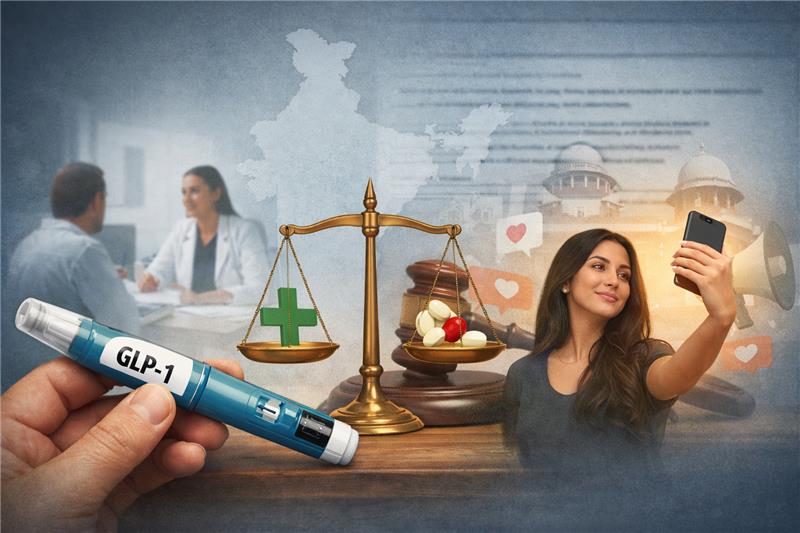
CDSCO Advisory on GLP-1 Drug Promotions : What Changes Now?

The Central Drugs Standard Control Organisation (CDSCO) has recently issued an Advisory that has the effect of re-shaping the legal landscape around disease awareness campaigns, surrogate promotion, and other communications for an entire class of medicines popularly known as GLP-1 receptor agonists or GLP-1 drugs (such as Semaglutide, Liraglutide, and Tirzepatide).

Informing patients about a medical condition and spreading awareness in terms of prevention or cure has never been the same as advertising a drug. For decades, disease awareness campaigns that made no product claim, named no drug, and directed patients to registered medical practitioners were understood to fall within that permitted space. That is the status quo that the Advisory has now broken, not just for GLP-1 drugs but for all kinds of prescription drugs.

I. What the existing law already says (What cannot be done)
The Indian law currently prohibits (i) any person making or participating in the publication of communication which claims to cure diabetes or obesity; (ii) any manufacturer or importer of drugs from advertising any prescription drug; and (iii) making a claim on the label to the effect that a drug can cure diabetes and obesity. Violation of any of the aforementioned can result in criminal prosecution and cancellation of the manufacturing and import license.
Importers and manufacturers build their market strategy around educating about the disease, which are popularly known as disease awareness campaigns. For instance, in the context of GLP-1 drugs, companies have started conducting educational campaigns to highlight obesity as a medical condition and urge people to consult a doctor, without directly naming a drug or making any efficacy claim, in compliance with applicable drug law frameworks.

II. What does the advisory change
The Advisory has, for the first time, brought disease awareness campaigns under the purview of advertisement. However, if the disease awareness campaign seeks to indirectly (i) promote prescription-only medicines to the general public, or (ii) exaggerate therapeutic efficacy, or (iii) suggest assured or guaranteed weight loss outcomes, or (iv) downplay lifestyle modification measures (diet, exercise, behavioural interventions), or (v) induce demand for pharmacological therapy, then it would amount to ‘surrogate advertisement’, then the regulator may take action against erring manufacturers, importers and marketers. In the paragraph below, we have given examples for each of these situations:

(i) Promotion of Prescription Drugs: A paid Instagram reel by a manufacturer depicting that consumption of a GLP-1 drug has led to weight loss would amount to promotion of a prescription-only drug to the general public.

(ii) Exaggeration of Therapeutic Effect: Statements such as “Works even without diet or exercise”, where the drug’s own prescribing information mandates lifestyle modification, would constitute an exaggeration of therapeutic effect.

(iii) Assured Outcome Claims: Claims such as “Guaranteed 10 kg loss in 8 weeks or your money back” would amount to a claim of assured outcome.

(iv) Downplaying Diet, Exercise, and Lifestyle Modification: Any communication where diet, exercise, is shown as ineffective, or unnecessary, may be construed as downplaying lifestyle modification.

(v) Inducement of Pharmacological Therapy: An educational or awareness campaign in which individuals are shown, encouraging or directing an overweight person to consult a doctor in a manner that suggests that medical or pharmacological intervention is the only and necessary solution.

The Advisory does not define what constitutes “inducement”, nor does it prescribe any objective threshold. This creates a zone of significant interpretational uncertainty. A script that never mentions a drug may still be found to create an impression of pharmacological inducement if the overall communication suggests that medical intervention is the primary or natural solution to the condition. In such cases, even in the absence of any product reference, the communication may be treated as a surrogate advertisement based on the impression it creates rather than the words it uses.

For example, if an influencer publicly discusses her medically supervised GLP-1 treatment journey without promoting any specific product, but emphasises the need to consult a doctor, could this be said to induce demand for pharmacological therapy? The Advisory leaves this question open, even when it extends its ambit to influencer engagements and collaborations.

It is important to note that while the drug regulatory framework under Drugs and Cosmetics Act, 1940 and the rules thereunder, primarily governs manufacturers, importers and marketers, advertisements by celebrities and influencers are independently regulated under the Drugs and Magic Remedies (Objectionable Advertisements) Act, 1954 (“DMRA”). The DMRA prohibits any person, including manufacturers, importers, marketers, influencers and even doctors, from publishing or participating in advertisements that directly or indirectly claim that a drug can be used for the treatment, cure, prevention, or mitigation of obesity and diabetes.

Therefore, in a scenario where a manufacturer engages or pays an influencer to create content documenting or promoting a GLP-1 treatment journey, the manufacturer may be exposed to liability under the Drugs and Cosmetics Act, 1940 and the rules governing prescription drug advertising, as well as under the DMRA. The influencer, on the other hand, while not directly regulated under the drug approval and marketing framework, would nevertheless fall within the scope of the DMRA, which applies to “any person” participating in such advertisements.

III. Surrogate Advertisement Problem
Further, this Advisory also sweeps all educational activity as a surrogate advertisement if it is “under the pretext of disease awareness” that creates “brand recall or product visibility”. The Advisory’s twin tests (the inducement standard and brand recall test) are both impression- and output-based, not content- or intention-based.

In simple terms, brand recall would include any element that reminds the viewer of a particular drug or brand, such as brand colours, taglines, packaging style, or any visual identity associated with a product. Product visibility or product placement would include showing a product, its packaging, or any identifiable brand element, even if it appears only in the background.

This gives rise to two important questions in light of the Advisory. (i) Is corporate branding allowed in disease awareness campaigns? Can disclaimers include product references or directions to product information?

In our view, corporate branding is permitted so long as it does not create an association with a specific prescription drug or product brand. Similarly, if a disclaimer mentions a product name, directs viewers to a product website, or provides product-related information, or if any scientific reference contains a product name or information, such communication may no longer remain a disease awareness campaign and may instead be treated as product promotion or surrogate advertisement. Furthermore, if a brand makes a tagline that strikingly resembles the product brand name, it would again be termed a violation.

IV. Way forward after the Advisory
Going forward, all drug and medical manufacturers and importers who invest in disease awareness campaigns would now need to ensure that such campaigns meet the requirements of the Advisory. From a visual standpoint, the standard imposed by the Advisory would effectively require zero product appearance. Beyond the visuals, the scripts will need to be vetted at every stage, not only for what they explicitly state, but also for what they may imply. How a disease awareness campaign is structured, including positioning of the elements such as doctor’s consultation, pharmacological treatment, efficacy claims, etc., in compliance with the Advisory, will be of critical importance to keep companies outside the risk of violation.

For obesity disease awareness campaigns specifically, it will be important to have a balanced and holistic approach in the advertisement, providing equal emphasis on lifestyle and diet, without medical consultation being shown as the only option. Further, medical consultation, if shown at all, would have to be framed generally as one of the options.

On a separate note, all drug and medical manufacturers and importers may proactively undertake a comprehensive review of their websites, creating disease awareness, containing educational materials, as well as their social media content and strategy, to not be caught off guard in light of the sweeping nature of the Advisory.

TOP 5 HEALTH LAWS AND POLICY UPDATES

Dear Readers, we are happy to share the most interesting legal and policy updates concerning health industry that we read today. We hope you enjoy reading it.

1. The Supreme Court of India has urged the Union Government to enact a comprehensive law governing passive euthanasia and end of life care in India. The Court noted that the absence of legislation has repeatedly required judicial guidelines, while permitting withdrawal of life sustaining treatment for a patient in a prolonged vegetative state.
Source: short-url.org/1qSHk

2. The Drugs Technical Advisory Board (DTAB) has recommended amending entry no. 33 of Schedule K to permit only unflavoured nicotine gums (2 mg) under sale license exemptions. Nicotine lozenges (2 mg) are excluded. Sale to minors is prohibited, online access closely monitored, and marketing by the tobacco industry restricted.
Source: short-url.org/1qSHq

3. A Mumbai Sessions Court has set aside criminal proceedings against directors of an e-commerce platform in a case concerning alleged online sale of abortion pills. The court held that the company operates as an intermediary marketplace and cannot be held directly liable for products listed by third-party sellers, highlighting limits on platform liability in e-commerce
Source: short-url.org/1lJ8-

4. The Drugs Technical Advisory Board (DTAB) has recommended introducing a separate form for wholesale bulk drug licences to capture details of wholesalers dealing with NDPS substances. Qualification criteria for competent persons and adequate transition time for existing wholesaler licensees to obtain the new licence is also proposed by DTAB
Source: short-url.org/1lJ9e

5. The Central Drugs Standard Control Organization (CDSCO) has issued an advisory warning manufacturers, importers and marketing authorisation holders against direct or indirect promotion of prescription medicines, including GLP-1 receptor agonists. The regulator noted that surrogate advertising, misleading efficacy claims and promotional campaigns increasing product visibility may constitute misleading marketing practices.
Source: short-url.org/1lJ9i

TOP 5 HEALTH LAWS AND POLICY UPDATES

Dear Readers, we are happy to share the most interesting legal and policy updates concerning health industry that we read today. We hope you enjoy reading it.

1. India’s Health Ministry has issued a draft notification proposing revisions to blood product testing requirements. It proposes that products must comply with standards in the Indian Pharmacopoeia, or where unavailable, the United States or British Pharmacopoeia, and removes the requirement to test final products for HIV-I, HIV-II, Hepatitis B surface antigen, and Hepatitis C antibodies.
Source: short-url.org/1lAp8

2. The Central Drugs Standard Control Organisation (CDSCO) has enabled online submission of applications for licences to manufacture recombinant deoxyribonucleic acid based drugs under Forms 28D and 28DA through the Online National Drugs Licensing System (SUGAM portal). From 10 March 2026, the regulator will no longer accept physical applications.
Source: short-url.org/1qJFy

3. The 93rd meeting of the Drugs Technical Advisory Board (DTAB), held on 16 February 2026, reviewed key technical and regulatory matters under the Drugs and Cosmetics Act and Rules. The board discussed policy recommendations, regulatory amendments, and technical issues affecting pharmaceuticals, biologics, and medical products, guiding future regulatory updates.
Source: short-url.org/1qJFF

4. India’s Telangana Drugs Control Administration has launched a bulk SMS alert system to instantly notify pharmacies and wholesalers about Not of Standard Quality (NSQ) drugs, enabling rapid recalls of sub standard drugs, strengthening regulatory monitoring, supply-chain transparency, and patient safety across the state’s pharmaceutical market.
Source: short-url.org/1lApq

5. The Technology Development Board of Government of India has extended financial support to commercialise a rapid diagnostic kit for childhood diarrhea, aimed at enabling faster detection of infections in paediatric patients.
Source: short-url.org/1lApu

TOP 5 HEALTH LAWS AND POLICY UPDATES

Dear Readers, we are happy to share the most interesting legal and policy updates concerning health industry that we read today. We hope you enjoy reading it.

1. The Central Drugs Standard Control Organisation (CDSCO) has introduced a prior intimation system for the submission of applications for analytical or non-clinical testing in Forms CT-10, CT-12, and CT-13 under the New Drugs and Clinical Trials Rules, 2019 through the National Single Window System (NSWS) portal. The system does not apply to sex hormones, cytotoxic drugs, beta-lactam drugs, biologics containing live microorganisms, or narcotic and psychotropic substances.
Source: short-url.org/1qC6E

2. The Government of India is reportedly considering stricter regulation of nicotine lozenges to curb access by minors and non-smokers. The Drugs Technical Advisory Board (DTAB) has reportedly recommended removing 2 mg nicotine lozenges from the exemption, which currently allows certain nicotine replacement therapy (NRT) products to be sold without a drug sale licence. If implemented, nicotine lozenges would largely be restricted to sale through licensed pharmacies.
Source: short-url.org/1lt4O

3. India’s central food regulatory authority (FSSAI) has recently in a Central Advisory Committee meeting urged states and UTs to strengthen enforcement against high-risk food commodities such as milk, edible oils, spices and honey. It called for risk-based inspections, faster recruitment of food safety officers, improved grievance redressal systems, and data-driven surveillance to strengthen monitoring and improve nationwide food safety oversight.
Source: short-url.org/1lt4V

4. Karnataka government has reportedly proposed banning the use of social media by children under the age of sixteen. Chief Minister Siddaramaiah announced the move during the state budget speech, stating that the measure aims to reduce the harmful effects of excessive mobile phone usage on minors across the state.
Source: short-url.org/1lt4-

5. India has outlined a five-pillar strategy to integrate artificial intelligence across healthcare, focusing on governance, data platforms, innovation, workforce capacity, and real-world validation. The framework aims to scale AI-driven diagnostics, public-health surveillance, and digital health infrastructure for pharma, med-tech, and health-tech companies to collaborate in data-driven healthcare innovation.
Source: short-url.org/1lt50

TOP 5 HEALTH LAWS AND POLICY UPDATES

Dear Readers, we are happy to share the most interesting legal and policy updates concerning health industry that we read today. We hope you enjoy reading it.

1. India’s central drug regulator, CDSCO has requested state drug regulators to direct manufacturers of Carbimazole formulations to incorporate agranulocytosis as an adverse drug reaction in Prescribing Information Leaflets (PIL) following recommendation by the Subject Expert Committee on Endocrinology and Metabolism.
Source: short-url.org/1pcz1

2. The Central Pollution Control Board (CPCB) has introduced a Common EPR Portal to unify all Extended Producer Responsibility activities under one platform. Through Single Sign-On (SSO), users can access Plastic, E-Waste, Battery, Tyre and Used Oil Management portals, and the EPR Trading Platform with one login. Registration is mandatory, with no additional fee.
Source: short-url.org/1pcz4

3. The Madras High Court has reportedly strongly criticised the practice of imposing non-compete and non-solicitation clauses on doctors in employment contracts, calling such restrictive covenants “unlawful on the face of it” and questioning their enforceability in healthcare settings. The bench indicated it will discourage hospitals from using these clauses, emphasising doctors’ freedom to practice and patient choice.
Source: short-url.org/1pcz6

4. The National Pharmaceutical Pricing Authority has reportedly deferred a decision on creating a separate price ceiling for cementless knee implants. The Multidisciplinary Committee will invite subject experts and manufacturers for detailed deliberations. Until a final determination is made, all companies must continue complying with the existing ceiling prices.
Source: short-url.org/1k7in

5. India’s drug regulator CDSCO is enhancing the online WHO-GMP Certificate of Pharmaceutical Product (CoPP) application via its ONDLS portal, partnering with C-DAC and state authorities to replace manual submissions. The digital shift aims to cut delays, improve transparency, and boost export readiness for Indian pharma manufacturers.
Source: short-url.org/1pcze

TOP 5 HEALTH LAWS AND POLICY UPDATES

Dear Readers, we are happy to share the most interesting legal and policy updates concerning health industry that we read today. We hope you enjoy reading it.

1. The Central Pollution Control Board (CPCB) has issued a notice to producers, importers, and brand-owners (PIBOs) who have not filed their plastic packaging Extended Producer Responsibility (EPR) annual returns (AR) for FY 2024-25. The AR filing deadline was extended to November 30, 2025, and CPCB has warned that environmental compensation will be levied on non-complying entities.
Source: minilink.pro/1jAk4

2. The Indian government is reportedly set to impose a minimum import price (MIP) on about 10 critical pharmaceutical raw materials, targeting underpriced Chinese imports. The move aims to protect domestic API producers amid concerns over dumping and strategic dependence on China.
Source: minilink.pro/1jAki

3. A Munich court has reportedly held that an AI system unlawfully reproduced copyrighted lyrics from multiple songs, ruling that the model had memorized protected content during training. The court rejected arguments based on data-mining exemptions and user liability. This ruling sets an important precedent for copyright protection in AI-driven economy.
Source: minilink.pro/1jAkl

4. West Bengal has flagged off 110 self-sufficient Mobile Medical Units (MMUs), each equipped for 35 free clinical tests including blood tests and X-rays with doctors, nurses, and technicians onboard. The initiative, partly funded via MPLAD, targets healthcare delivery in remote, hilly, and tribal regions.
Source: minilink.pro/1jAkZ

5. Chief Executive Officer of Food Safety and Standards Authority of India has directed all the States/Union Territories to fast-track food-safety grievance redressal with fortnightly reviews and publish enforcement actions daily. He also directed mandatory NABL accreditation and optimal use of High-End Equipment in labs, emphasizing data-driven decisions, streamlined licensing, and stronger centralized surveillance for nationwide food-safety reliability.
Source: minilink.pro/1jAkx

TOP 5 HEALTH LAWS AND POLICY UPDATES

Dear Readers, we are happy to share the most interesting legal and policy updates concerning health industry that we read today. We hope you enjoy reading it.

1. The Indian Central Government has eased GST rate revision compliance for manufacturers and importers allowing them to voluntarily affix revised price stickers on unsold stock manufactured before September 22, 2025, without obscuring the original price. Mandatory newspaper advertisements have been waived and only circulars to dealers and retailers are needed. Old packaging can be used until March 31, 2026, with price corrections allowed.
Source: short-url.org/1fjNU

2. Food Safety and Standards Authority of India (FSSAI) will be conducting a nationwide enforcement drive in October 2025 targeting 13 whole and powdered spices after a 2024–25 surveillance found substandard quality, contaminants, and labelling lapses. Only manufacturing units will be inspected, with samples tested in NABL-accredited labs. States authorities are required to submit reports by 20 November 2025.
Source: short-url.org/1aHQi

3. The Drugs Control Department of Delhi has directed all manufacturers and marketers of drugs, formulations, and medical devices to revise MRPs as per reduced Goods and Services Tax (GST) rates effective 22 September 2025. Revised price lists must reach retailers, and billing systems must be updated to reflect new GST rates.
Source: short-url.org/1fjO6

4. The Bangalore District Chemists and Druggists Association has warned that Goods and Services Tax 2.0 will force pharmacy retailers to absorb losses as they sell old stock at reduced maximum retail prices without input tax credit. It urged authorities to assure no penalties during the transition until December 31, 2025.
Source: short-url.org/1aHQy

5. India’s Federation of Pharmaceutical Merchant Exporters (FPME) has urged exporters to share feedback on the challenges faced with the new dual-use No Objection Certificate (NOC) system introduced by CDSCO via the Sugam portal. Reportedly, The new process has caused delays and increased documentation requirements, impacting export efficiency. FPME has urged Pharmexcil to address these issues with regulatory authorities to streamline export compliance.
Source: short-url.org/1fjOk

TOP 5 HEALTH LAWS AND POLICY UPDATES

Dear Readers, we are happy to share the most interesting legal and policy updates concerning health industry that we read today. we hope you enjoy reading it.

1. India’s Health Ministry has approved adding the HPV vaccine to the Universal Immunisation Programme, targeting girls aged 9–14. This aligns with the June 2022 NTAGI recommendation and is supported by ongoing frontline healthcare worker training and rollout planning.
Source: shorturl.at/3e0T0

2. Meghalaya announced plans to introduce legislation requiring mandatory HIV/AIDS testing prior to marriage. The government is drafting a cabinet note and engaging district stakeholders to advance a mission mode HIV control policy.
Source: tinyurl.com/yfhymxdx

3. The India-UK Free Trade Agreement, signed on July 24, 2025, excludes patent term extensions and data exclusivity, safeguarding India’s generic drug industry. However, experts warn it restricts compulsory licensing by promoting voluntary licences and “adequate remuneration” clauses, and that this could undermine India’s ability to supply affordable medicines to developing countries.
Source: tinyurl.com/3wm9wwz9

4. The All-India Organisation of Chemists and Druggists (AIOCD), representing over 12 lakh chemists nationwide has reportedly urged the Drug Controller General of India to take urgent action, alleging that State Licensing Authorities are failing to stop illegal e pharmacies misusing draft notifications leading to unregulated online medicine sales and posing risks to public health.
Source: tinyurl.com/39b9a44n

5. Nathealth urged Niti Aayog to simplify healthcare regulations through a digital single-window system, highlighting burdensome compliance from 10–12 ministries. A white paper identified 85 regulatory challenges, calling for harmonisation across states to boost efficiency, innovation, and patient-focused care in hospitals, diagnostics, and medtech.
Source: tinyurl.com/5582rp5n

TOP 5 HEALTH LAWS AND POLICY UPDATES

Dear Readers, we are happy to share the most interesting legal and policy updates concerning health industry that we read today. we hope you enjoy reading it.

1. The Indian Medical Association (IMA) has challenged the Maharashtra government’s decision allowing homeopaths to prescribe allopathic medicines after six months of certified training, calling it a threat to public health. The IMA has filed a petition in the Bombay High Court, urging an expedited resolution of the matter.
Source: bit.ly/4kl20ip

2. A government panel, the Drugs Consultative Committee (DCC) under CDSCO, has directed State Licensing Authorities not to issue manufacturing licenses for new drugs without prior approval from the Central Licensing Authority (CLA), as mandated by New Drugs Clinical Trial Rules 2019.
Source: bit.ly/3GC8A6l

3. India’s NITI Aayog has setup an expert panel to review quality concerns in India’s pharmaceutical manufacturing. It will assess regulatory gaps and challenges across 3,000 companies and 10,500 units. The goal is to align production with global standards, boost compliance, and ensure patient safety to uphold India’s global medicine supplier status.
Source: bit.ly/3GvWBHB

4. The Drugs Consultative Committee (DCC) has recommended inclusion of detachable Braille cards and voice-enabled QR codes on medicine packaging to enhance accessibility for visually impaired patients. The proposal aims to standardize inclusive labeling across pharma products, aligning with patient-centric and accessibility-first regulatory reforms.
Source: bit.ly/3TttpUw

5. The Drugs Consultative Committee (DCC) has approved amendments to Forms 27D/27DA and 28D/28DA under the Drugs Rules, 1945, enabling manufacturers to apply for licenses to produce stem cell-derived, gene therapy, xenograft, and modified-release products via both state and central authorities.
Source: bit.ly/3Ii5o0f