Ensuring that all citizens can safely access and use medicines is a fundamental marker of an inclusive and progressive society. Many countries recognize that equitable healthcare requires not only affordable medicines but also accessible information about them. While several jurisdictions have made notable progress in mandating Braille labelling and accessible formats on medicines, India is steadily advancing along a similar path.
Legal and policy context in India:
The Indian law which governs labelling of medicines is the Drugs and Cosmetics Act, 1940. It focuses on the safety and authenticity of medicines but is silent on the specific accessibility needs of persons with disabilities. The Indian law which protects rights of disabled persons, The Rights of Persons with Disabilities (RPWD) Act, 2016, mandates equality, non-discrimination, and accessible information in audio, print, and electronic formats. However, these rights have not yet been translated into compulsory standards for accessible drug labelling.
Global practices and Indian judicial activism
In the European Union, medicine name labelling in Braille on outer cartons is legally required for most patients handled prescription medicines under Directive 2001/83/EC (as amended), enabling many visually impaired people to manage medicines more independently.
India has shown forward movement through judicial activism. Notably, the Supreme Court of India, in response to a public interest petition (W.P.(Civil) No. 516 of 2024), issued a notice via its order dated 27 August 2024, seeking responses from government on guidelines for implementing a Braille Integration System on medicine prescriptions, strips, labels, consumer products, and currency notes. The petition detailed the serious barriers faced by visually impaired people: difficulty in identifying currency notes, reading product labels, and managing prescriptions independently. These issues, the plea argued, constitute violations of the constitutional rights to equality and dignity under Articles 14, 16, 19, and 21 of the Indian Constitution. It also emphasized how the absence of Braille on key everyday items forces visually impaired citizens to depend on others for essential information in public and private settings.
Separately, Indian courts have directed platforms like Netflix and other OTT services to make their user interfaces more accessible, including audio descriptions for the visually impaired. These examples show courts stepping in to advance accessibility where government policy has lagged.
Current regulatory efforts and their limitations:
India’s central drug regulatory authority, the Central Drugs Standards Control Organization (CDSCO), has recently acknowledged these longstanding issues and on 9th September 2025, it invited stakeholder comments on proposals to address the challenges faced by blind and visually impaired individuals when reading tablet and capsule strips. Key recommendations included:
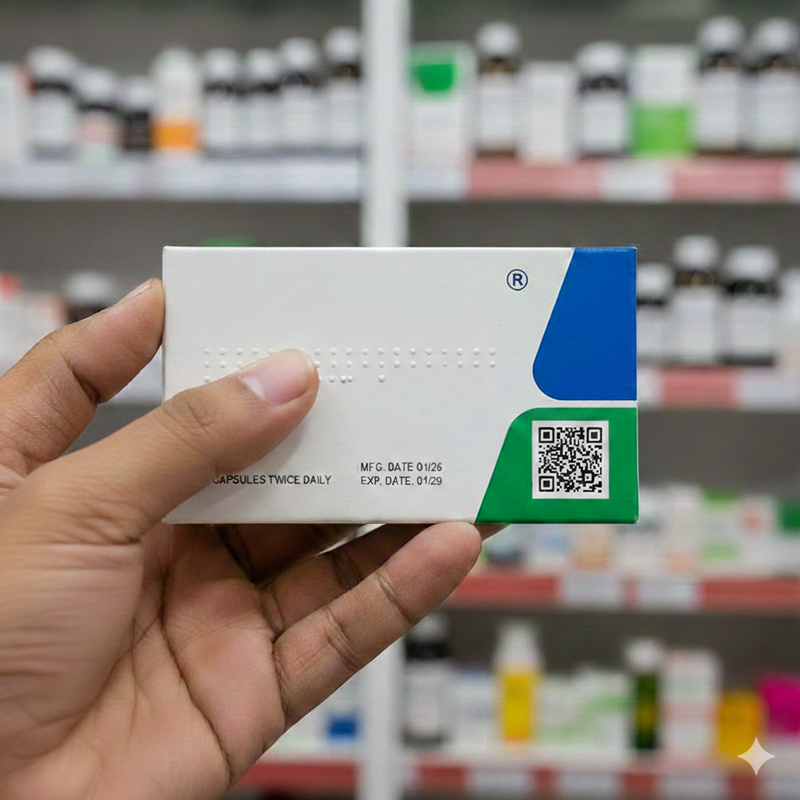
- Introducing Braille labelling on medicines supplied in mono-carton packs on a voluntary basis initially, prioritizing products like eye drops that are frequently used by visually impaired patients.
- Including Braille cards with secondary packaging for medicines supplied in bulk quantities exceeding ten units.
- Adding QR codes on packaging linked to voice assistance technology to provide audio-based medicine information.
- Ensuring that Braille labels are validated by recognized institutions such as the National Institute for the Empowerment of Persons with Intellectual Disabilities (NIEPID), in conjunction with the Braille Council of India.
- Exempting medicines administered solely by healthcare professionals (injectables, vaccines), although concerns remain around the exclusion of certain self-administered devices like prefilled injection pens.
- Making available patient information leaflets in accessible formats such as Braille, large print, and audio versions upon request.
- Advising pharmacists and retailers to provide verbal guidance to visually impaired patients concerning medicine names, dosages, expiry dates, and usage instructions.
However, these initiatives have so far only been offered for stakeholder comment and feedback, with no clear timetable for adoption or any mandatory framework for implementation. As a result, there remains significant uncertainty about when these measures will become legally binding and uniformly enforced across the pharmaceutical industry. This leaves millions in continued limbo, dependent on voluntary compliance rather than assured rights, and underscores the urgent need for the government to move from consultation to concrete action.
The human impact and need for urgency:
For visually impaired individuals, inaccessible drug labelling creates daily challenges and safety risks. The inability to read medicine names, expiry dates, and dosage instructions often leads to dependence on caregivers and undermines autonomy and dignity. Prolonged consultations and voluntary measures have repeatedly failed to address these realities.
What is expected versus what is realistically doable
There is a clear gap between regulatory ambition and on-ground feasibility. Expecting full Braille labelling on every primary strip or blister pack presents technical, spatial, and cost challenges, particularly for medicines with small packaging or high-volume generic production. At the same time, doing nothing perpetuates risk and dependence.
The critical question, therefore, is not whether accessibility should be provided, but how it can be implemented in a manner that is practical, scalable, and enforceable across India’s diverse pharmaceutical and retail ecosystem.
Practical alternatives and pharmacist-led solutions
A more workable approach may lie in standardized yet flexible solutions. Instead of attempting to place complete Braille information on every label, manufacturers could be required to maintain one standardized Braille specimen for each product, covering information required on drugs label as per the Drugs Rules, 1945. This specimen could apply to both the label content and the patient information leaflet.
Retail pharmacists could then play a central role by keeping these Braille specimens or accessible leaflets available at the point of sale and providing them on request, alongside verbal counselling. QR codes linked to verified audio instructions could further complement this system, allowing patients to access information privately and independently.
Such an approach recognizes operational realities while still advancing accessibility in a meaningful way that pharmacists and retailers can realistically manage.
Conclusion:
Millions of visually impaired Indians continue to face significant barriers because medicine labels remain inaccessible. This is not merely an inconvenience, it directly affects safety, independence, and dignity. When people cannot read labels, they are forced to rely on others to manage their health.
With binding regulations, clear timelines, and thorough enforcement, the Indian Government has the ability give every individual the confidence and freedom to manage his or her health safely and independently.