

TOP 5 HEALTH LAWS AND POLICY UPDATES

Dear Reader, We are happy to share the most interesting legal and policy updates concerning health industry that we read today. We hope you enjoy reading it.

Major Indian Ayurvedic Medicine Manufacturer to be tried for Contempt of Court for publishing misleading drug advertisements
India’s Supreme Court is reportedly set to issue a Contempt Notice to a major Ayurvedic medicines manufacturer in India after it found out that the manufacturer had published a misleading advertisement claiming permanent relief for certain chronic conditions such as Diabetes and Liver Cirrhosis. In November 2023, the manufacturer had given an undertaking to the Supreme Court that it will not publish misleading advertisements or disparage allopathy. The Supreme Court has also questioned the Indian government for its inaction over publication of misleading advertisements by the manufacturer despite existence of a law which makes publication of misleading advertisement punishable with imprisonment.
Source: bit.ly/42U33yI

Doctors will have to obtain registration with State Medical Council of every State where they practice: Delhi HC
The High Court of Delhi has upheld the legality of a notice issued by Delhi Medical Council which made it mandatory for Doctors to register with the Council if they wanted to practice in the State of Delhi. The Doctors argued that it was an onerous requirement which would require them to register in every State they practice in. However, the Court held that the intent of the law is to require Doctors to register in every State that they practice in, and that Doctors have the option to register with multiple State Medical Councils in India.
Source: bit.ly/3TgHANw

Cosmetic Importers asked to provide sales details in a bid to curb import of counterfeit cosmetics
In an effort to curb the import of counterfeit cosmetic products, India’s Central Cosmetics Regulator, Drugs Controller General of India, has directed importers of cosmetics who import cosmetics already registered by authorized importers, to furnish annual sales details such as number of consignments, imported quantity, total cost of imported cosmetics of each consignment, along with warehouse details.
Source: bit.ly/42T2IMR

Central Government has to fix ceiling prices of medical treatment within 2 months: Supreme Court
The Supreme Court has directed the Central Government publish ceiling prices for medical treatments offered by Hospitals all over the country within 2 months. If the Central Government fails to do so, the Supreme Court has said that it will direct Central Government to fix medical treatment costs stipulated under Central Government Health Scheme as ceiling price of medical treatment offered by Hospitals for the whole country.
Source: bit.ly/3wsyHHs

India Seeks to delay implementation of EU Carbon Emissions Limits
India is set to conduct negotiation with the European Union regarding the implementation of the Carbon Control Regime, seeking a complete elimination of the Carbon Border Adjustment Mechanism, failing which India will seek an extension of timelines for reduction of emissions. It is expected that in order to comply with requirements under EU Carbon Control Regime, Indian exporters will have to make significant capital investment will increase cost of production.
Source: bit.ly/42S7DxH
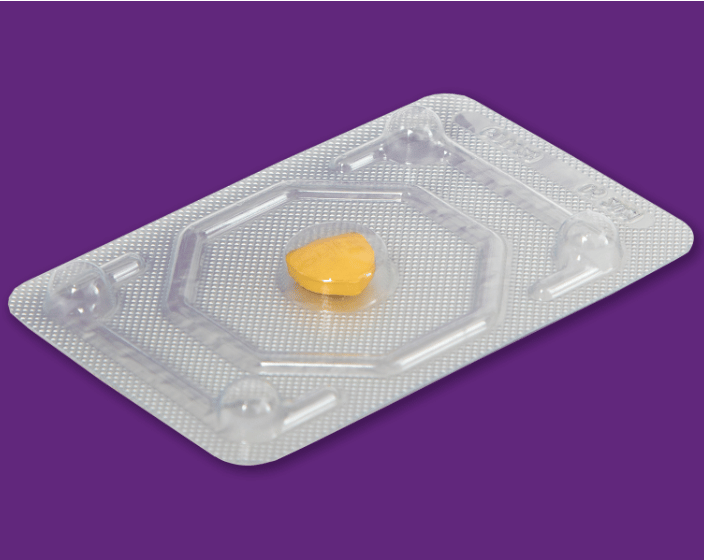

Can Oral Contraceptive Pills be advertised in India?

Oral Contraceptive Pills (OCPs), also known as daily contraception pills or birth control pills are used to prevent pregnancy. However, these pills have their limitations and side effects. Given the use of OCPs, one would expect it to be widely advertised to the public in India. However, it is rare to come across an advertisement that freely advertises OCPs. Even, the label of such OCPs in itself does not indicate that it is intended to be used for the prevention of pregnancy in women after unprotected sex.

It is important to understand OCPs are different from Emergency Contraception Pills (ECPs). OCPs are taken regularly to prevent pregnancy. An ECP, on the other hand, contains a single active ingredient in high dosage and is taken once after unprotected sex to prevent pregnancy.

In this article, we have analysed the legal framework for the advertisement of OCPs in India and concluded that while there is a legal bar on the advertisement of OCPs, certain compositions and strengths of OCPs may be advertised.

Legal Framework for Advertisement of ECPs

There are two laws that regulate the advertisement of OCPs –the Drug Rules, 1945 (“Drugs Rules”) which bar the advertisement of prescription drugs, and the Drugs and Magic Remedies (Objectionable Advertisements) Act, 1954 (“DMRA”) which bar advertisement of a drug in terms which may suggest that it may be used for prevention of conception in women. However, both Drugs Rules and DMRA have certain exceptions, which we will discuss in the following paragraphs.

Exceptions under Drugs Rules for OCPs

There are certain compositions of OCPs that have been exempted from the requirement of being sold under a drug license, with the underlying intent there being that such compositions ought not be sold under a prescription of a registered medical practitioner (“Doctor”). We have reproduced the composition of these OCPs in the table below.

1. DL-Norgestrel-0.30 mg.
Ethinyloestradiol-0.03 mg.
2. Levonorgestrel-0.15 mg.
Ethinyloestradiol-0.03 mg.
3. Centchroman-30mg.
4. Desogestrel -0.150mg.
Ethinyloestradiol 0.030mg.
5. Levonorgestrel 0.1mg
Ethinyloestradiol 0.02mg

The above OCPs are clearly not prescription drugs, and therefore the bar on advertisement of prescription drugs would not apply to those OCPs.

Exception under the Drugs and Magic Remedies Act

The DMRA contains an enabling provisions through which the Central Government can restrict the scope of DMRA. In 1992, the Central Government notified a list of compositions of OCPs to which the restriction on advertisement under DMRA will not apply. We have reproduced the composition per tablet of these OCPs in the table below.

a. DL-Norgestrel- 0.30 mg.
Ethinyl Estradiol- 0.03 mg;
b. Levo-norgestrel- 0.15 mg.
Ethinyl Estradiol- 0.03 mg;
c. Centchroman- 30 mg.

Therefore, in so far as OCPs are concerned, only the below compositions of OCPs which are exempted under both Drug Rules and DMRA may be advertised in India, subject to certain basic compliance conditions and other informal guidance issued by Regulators from time to time.

1. DL-Norgestrel- 0.30 mg.
Ethinyl Estradiol- 0.03 mg;
2. Levo-norgestrel- 0.15 mg.
Ethinyl Estradiol- 0.03 mg;
3. Centchroman- 30 mg.

Past controversies

In 2008, a criminal complaint was filed against Cipla Ltd. and its Directors, a major pharmaceutical company, for the advertisement of contraception pill sold under the brand name ‘Ipill’, having a composition of Levonorgestrel IP-1.5 mg. In 2015, another criminal complaint was filed against Cipla Ltd. and its Directors, for the advertisement of another contraception pill having the same composition but bearing the brand name ‘EK Pill’. The grounds in both the complaints were the same, that Cipla Ltd. had violated DMRA by advertising contraception pill to indicate that it can prevent conception in women. Cipla filed a petition against the criminal complaints and prevailed in both the cases on grounds that it had been explicitly permitted by the Central Drugs Standards Control Organization (CDSCO) to advertise the drugs. It relied on a 1961 notification under DMRA, which allowed companies to advertise ECPs, provided they were approved by the Central Government (CDSCO).

Going forward

As indicated above, certain compositions of OCPs may be advertised. However, before advertising, it should be ensured that the advertisement meets the requirements of law and also guidelines that have been proposed by various authorities. For example, the advertisement should not be misleading. A violation of the law can result in criminal prosecution as well as cancellation of the manufacturing license.

TOP 5 HEALTH LAWS AND POLICY UPDATES

Dear Reader, We are happy to share the most interesting legal and policy updates concerning health industry that we read today. We hope you enjoy reading it.

Guidelines to differentiate brand extension from surrogate advertising issued
In a meeting with stakeholders, the Department of Consumer Affairs (DoCA) has clarified the difference between brand extension advertisements which are permitted, and surrogate advertisements which are not permitted. A brand extension advertisement should not contain direct or indirect references to prohibited products. It should also not use colour, layout, or presentations associated with the prohibited products.
Source: bit.ly/42PKVGk

Draft Pharmacovigilance Guidance Document published for comments
A draft of the revised Pharmacovigilance Guidance Document for Marketing Authorization Holders (MAHs) of Pharmaceutical Products has been published for comments. The last date for providing comments is March 23, 2024. This guidance document facilitates MAHs to setup & implementation of uniform Pharmacovigilance System for pharmaceutical products in the Indian market in the post-licensure period.
Source: bit.ly/3SSrfgw

Many small and medium pharmaceutical manufacturing units have been ordered shut down after increased surveillance
India’s central drug regulator, Central Drugs and Standards Control Organization (CDSCO), and state-level drug licensing authorities have reportedly issued show-cause notices to several drug small and medium manufacturers in the State of Punjab and Himachal Pradesh on grounds of poor quality control, and have also directed some of them to stop manufacturing.
Source: bit.ly/3I88UqP

Pharma MNCs exit domestic market due to regulatory headwinds
Many multinational pharmaceutical companies are reportedly cutting back on operations and manufacturing in India as part of a global strategic review due to regulatory headwinds on account of price control, rising costs, competition, and unfavourable intellectual property climate.
Source: bit.ly/42PaWW9

Frozen embryos should be treated as children: US Court
The Alabama State Supreme Court has ruled that frozen embryos in test tubes should be treated as ‘children’. This ruling has forced in vitro fertilization (IVF) providers in Alabama to stop treating patients, raising questions about the procedure’s continued availability in the state.
Source: bit.ly/3I8T4vR